Nervous System Regulation Through Yoga: Why It's the #1 Wellness Trend of 2026

Key Takeaways
Nervous system regulation has become the most talked-about wellness concept of 2026. Yoga, pranayama, and Ayurveda offer some of the most effective tools for shifting the body from chronic stress into rest-and-digest — and they have for thousands of years.
If there is one phrase that defines the wellness conversation of 2026, it is “nervous system regulation.” But the tools people are discovering — breath, stillness, mindful movement — are not new. They are yoga.
What Is Nervous System Regulation?
Your autonomic nervous system has two main branches: the sympathetic (fight-or-flight) and the parasympathetic (rest-and-digest). In a healthy state, your body moves fluidly between them — activating when needed, relaxing when the threat passes.
The problem is that modern life keeps the sympathetic branch switched on. Notifications, deadlines, financial pressure, and digital overload all signal “danger” to a nervous system that cannot distinguish between a genuine threat and a crowded inbox. The result is chronic low-grade stress: elevated cortisol, shallow breathing, poor sleep, digestive issues, and a persistent sense of alertness that never quite turns off.
Nervous system regulation is the practice of actively training your body to return to the parasympathetic state — not by accident, but by design. And this is exactly what yoga has always done.
Why Yoga Is the Original Nervous System Medicine
The Global Wellness Institute identified neurowellness and nervous system regulation as a defining trend for 2026. Researchers are studying how yogic practices influence heart rate variability, inflammatory pathways, and emotional regulation. But long before the science, the yogis understood that breath, movement, and stillness could reshape how we feel.
Here is how the core limbs of yoga map onto modern nervous system science:
Pranayama (Breath Control)
Slow, conscious breathing — especially extending the exhale — directly stimulates the vagus nerve, the main highway of the parasympathetic system. Research shows that breathing at around six breaths per minute improves heart rate variability and reduces anxiety. This is not a discovery. It is pranayama, practiced for millennia.
Asana (Mindful Movement)
Slow, deliberate movement with attention to sensation shifts the body out of performance mode and into interoceptive awareness — the ability to feel what is happening inside. This is why restorative yoga, Yin, and gentle Hatha are having a renaissance. They give the nervous system the time and safety it needs to downshift.
Meditation and Yoga Nidra
Meditation trains the mind to observe without reacting. Yoga Nidra, sometimes called yogic sleep, guides the body to the threshold of sleep while maintaining gentle awareness. Both practices have been shown to reduce cortisol, improve sleep quality, and build emotional resilience.
Signs Your Nervous System Needs Regulation
You do not need a wearable to know when your nervous system is stuck in overdrive. The body tells you clearly:
- You feel tired but wired at night — exhausted, yet unable to wind down
- Your digestion is irregular, bloated, or sluggish
- Small stressors trigger disproportionate emotional reactions
- You wake up already feeling behind, before the day has started
- Your mind races in stillness, making rest feel uncomfortable
- You rely on caffeine to start and alcohol or screens to stop
If several of these resonate, your nervous system is asking for help. The good news: yoga offers some of the most accessible, evidence-supported tools available.
A Simple Daily Practice for Nervous System Reset
You do not need an hour. Ten to fifteen minutes, done consistently, is more powerful than a monthly two-hour session. Here is a simple sequence you can do anywhere:
1. Extended Exhale Breathing (3 minutes)
Sit comfortably. Inhale for a count of four, exhale for a count of six or eight. The longer exhale is the key — it signals safety to the vagus nerve. Do this for three minutes and notice your shoulders drop.
2. Grounding Asana (5 minutes)
Move through slow, floor-based postures: Child’s Pose, Cat-Cow, seated forward fold, gentle twists, and Legs-Up-the-Wall. Move with your breath, not against it. The goal is not stretching — it is feeling.
3. Savasana or Yoga Nidra (5 minutes)
Lie down. Do nothing. If your mind wanders, let it. The practice is not emptying the mind — it is giving the nervous system permission to rest. Even five minutes of conscious stillness resets the baseline.
Why Retreats Accelerate the Reset
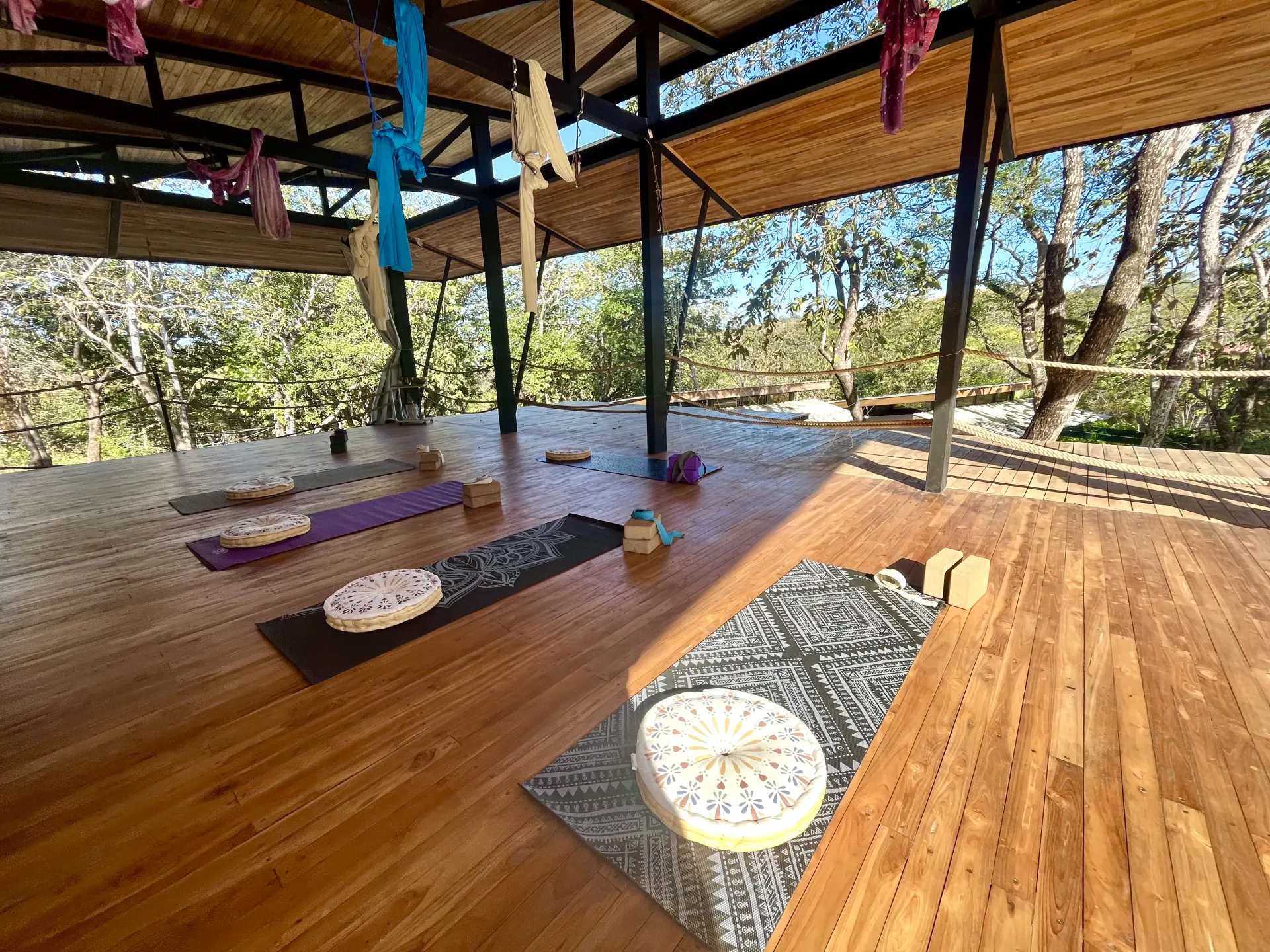
Daily home practice is the foundation. But a retreat provides something a home routine cannot: complete removal from the triggers that keep your nervous system activated. No emails, no notifications, no schedule to manage. Just time, nature, community, and practice.
Our Reset & Reprogramming Retreat is designed specifically around nervous system regulation — using somatic practices, breathwork, and mindfulness to break old patterns and rewire for peace. Our Breathwork Training offers a deeper dive into the science and practice of conscious breathing.
Deepen Your Journey
Ready to move from inspiration into transformation? Explore our trainings, retreats, and personalized guidance.
The Trend Is Ancient
The wellness industry is rediscovering what yoga has always known: that the breath is the most direct lever for shifting your state, that stillness is medicine, and that the body holds the key to emotional resilience. You do not need a device to tell you that you have rested. You need a practice — and the willingness to slow down.
Start where you are. Five breaths. One pose. One minute of silence. Your nervous system will meet you there.